
Climate change represents the greatest environmental challenge of our time, with impacts that threaten ecosystems, economies, and livelihoods worldwide. The Intergovernmental Panel on Climate Change (IPCC) warns that while Earth’s climate has naturally fluctuated over centuries, human-driven activities—industrialization, deforestation, and rapid urbanization—have dramatically accelerated these changes in recent decades. Nowhere are the consequences more starkly felt than among vulnerable populations, including rural smallholder farmers, women, youth, persons with disabilities, and marginalized groups who depend on climate-sensitive livelihoods like subsistence agriculture.
In Kenya, the crisis is particularly acute. Scientific projections indicate temperatures could rise by 2.5°C by 2050, coupled with increasingly erratic rainfall patterns. These shifts jeopardize food and water security for millions, especially in rural regions where rain-fed farming remains the backbone of survival. To combat this growing threat, innovative solutions like the Participatory Assessment of Climate and Disaster Risk (PACDR) are empowering communities to lead their own resilience efforts.
PACDR represents a paradigm shift in climate risk management—moving from top-down directives to community-owned solutions. This framework engages local residents in structured dialogues where they analyze climate hazards, assess vulnerabilities, and co-design adaptation strategies tailored to their unique circumstances. Unlike conventional approaches, PACDR ensures those most affected by climate change—often excluded from decision-making—become architects of their own future.
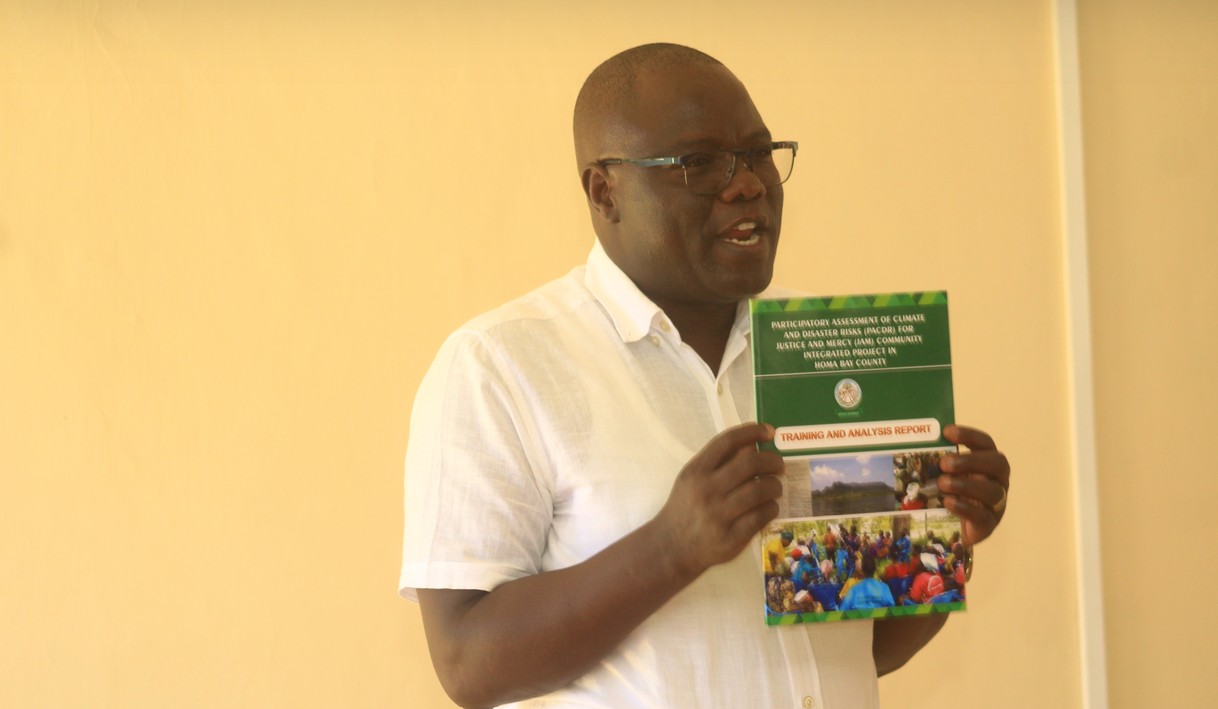
Organizations like Justice And Mercy (JAM) Community Integrated Project have pioneered PACDR implementation in Kenya’s vulnerable regions. In Homa Bay County, where small-scale farmers grapple with intensifying droughts and floods, JAM facilitated PACDR processes across four sub-counties, engaging 297 participants—from women and youth to persons with disabilities and local leaders. Through interactive tools like hazard mapping, seasonal calendars, and gender vulnerability analyses, communities systematically identified their greatest climate threats and most promising solutions.
The PACDR process revealed several crucial insights about climate vulnerabilities in the communities studied. Farming stood out as the livelihood most threatened by climate impacts, with participants identifying drought as the most severe hazard, followed closely by destructive floods and devastating crop diseases. The assessment highlighted significant inequities in climate risk exposure, showing that women, children, and persons with disabilities bear disproportionate burdens due to their limited access to resources and frequent exclusion from critical decision-making processes.
Across all groups, water scarcity emerged as a paramount concern, with community members overwhelmingly prioritizing solutions like improved irrigation systems, better water storage infrastructure, and the adoption of drought-resistant crop varieties as essential adaptation measures. Importantly, participants consistently emphasized that meaningful progress would require strong local partnerships, identifying county governments, NGOs, and implementing agencies like JAM as vital collaborators for scaling up effective solutions and building long-term resilience.
Perhaps most powerfully, the process revealed untapped resilience: communities already employing innovative coping strategies, from seed banking to agroforestry, now seek support to expand these efforts.
The PACDR model’s strength lies in its actionable outcomes. In Homa Bay, consensus-building workshops distilled community priorities into concrete steps: constructing boreholes, promoting drought-tolerant crops, and strengthening early warning systems. Critically, the process also highlighted systemic gaps—like the need to include youth and marginalized groups in disaster planning—ensuring future interventions leave no one behind.
Kenya’s PACDR experience offers a replicable model for climate adaptation globally. By centering local knowledge and leadership, it bridges the gap between policy and practice, transforming vulnerable communities from victims of climate change to agents of solutions. As JAM and partners work to implement PACDR-driven projects—from water infrastructure to climate-smart agriculture—they demonstrate that true resilience is grown from the ground up.
In an era of climate uncertainty, approaches like PACDR provide more than hope; they offer a roadmap. When communities are equipped to diagnose their vulnerabilities and design their own solutions, adaptation becomes more than survival—it becomes transformation. For Kenya’s rural families, this means not just weathering the storm, but sowing the seeds of a sustainable future.